Acute Sinusitis (Acute Rhinosinusitis): Classification, Clinical Manifestations, Diagnosis, and Treatment
A detailed review of rhinosinusitis, including classification, symptoms, diagnostic approaches, and current treatment strategies.


Anesthesia
Pain management and sedation techniques

Angiology
Arterial and venous pathologies

Cardiology
Acquired and congenital heart diseases

Dentistry
Diseases of teeth, gums, and the oral cavity

Dermatology
Disorders of the skin and subcutaneous tissue

Endocrinology
Disorders of the glands and hormonal imbalance

Gastroenterology
Stomach, intestinal, and digestive diseases

Gynecology
Diseases of female reproductive organs

Hematology
Hematopoiesis and blood-related disorders

Hepatology
Liver, gallbladder, and biliary tract diseases

Histology
Microscopic tissue and cell structures

Infectious diseases
Bacterial, viral, and parasitic infections

Neurology
Brain, spinal cord, and peripheral nerve disorders

Obstetrics
Pregnancy complications and abnormal fetal positions

Oncology
Cancer types, benign and malignant tumors

Ophthalmology
Conditions affecting the eyes and vision

Orthopedics
Bone, joint, and soft tissue disorders

Otorhinolaryngology
Ear, nose, and throat diseases

Pediatrics
Child health, development, and clinical conditions

Physiology
Biological processes within organs and systems

Pulmonology
Lung and respiratory tract diseases

Traumatology
Acute injuries and musculoskeletal trauma

Urology
Urinary tract and male reproductive disorders
Anesthesia
Pain management and sedation techniques
Angiology
Arterial and venous pathologies
Cardiology
Acquired and congenital heart diseases
Dentistry
Diseases of teeth, gums, and the oral cavity
Dermatology
Disorders of the skin and subcutaneous tissue
Endocrinology
Disorders of the glands and hormonal imbalance
Gastroenterology
Stomach, intestinal, and digestive diseases
Gynecology
Diseases of female reproductive organs
Hematology
Hematopoiesis and blood-related disorders
Hepatology
Liver, gallbladder, and biliary tract diseases
Histology
Microscopic tissue and cell structures
Infectious diseases
Bacterial, viral, and parasitic infections
Neurology
Brain, spinal cord, and peripheral nerve disorders
Obstetrics
Pregnancy complications and abnormal fetal positions
Oncology
Cancer types, benign and malignant tumors
Ophthalmology
Conditions affecting the eyes and vision
Orthopedics
Bone, joint, and soft tissue disorders
Otorhinolaryngology
Ear, nose, and throat diseases
Pediatrics
Child health, development, and clinical conditions
Physiology
Biological processes within organs and systems
Pulmonology
Lung and respiratory tract diseases
Traumatology
Acute injuries and musculoskeletal trauma
Urology
Urinary tract and male reproductive disorders

This article is for informational purposes only
The content on this website, including text, graphics, and other materials, is provided for informational purposes only. It is not intended as advice or guidance. Regarding your specific medical condition or treatment, please consult your healthcare provider.
Острый ларингит — воспаление гортани, сохраняющееся до 7 дней. Характеризуется развитием сосудистой гиперемии, отека и клеточной инфильтрации слизистой, преимущественно в области голосовых складок. Указанные изменения нарушают функцию голосового аппарата, вызывая охриплость, сухой кашель и ощущение першения.
The following forms of acute laryngitis are distinguished:
The causes of acute laryngitis are infectious and non-infectious. Among infectious pathogens, viruses predominate, while bacteria are less common and fungi are extremely rare.
Infectious factors
| Viruses | Грипп, парагрипп, РС-вирус, адено- и риновирус, вирус Коксаки, коронавирус, корь |
| Bacteria | Streptococcus pneumoniae, Haemophilus influenzae, Moraxella catarrhalis |
| Fungi (more common in chronic laryngitis) | Candida, Aspergillus, Penicillium |
| Inflammatory processes of the upper respiratory tract | Adenoiditis, sinusitis, rhinitis |
Non-infectious factors
| Allergic reactions | Dust, animal hair, chemical substances |
| Excessive vocal strain | Singing, shouting, prolonged speech, improper use of the voice |
| Environmental irritants | Smoke, chemical vapors, polluted air |
Под воздействием инфекционного фактора, на фоне общей интоксикации организма и катаральных изменений в носо- и ротоглотке, возникают аналогичные изменения в слизистой оболочке гортани. Если воспаление вызвано неинфекционной причиной, патологические изменения в носо- и ротоглотке могут отсутствовать.
При острых или хронических синуситах и аденоидитах происходит стекание слизи по задней стенке глотки. При этом слизь попадает, в том числе, и на голосовые складки, вызывая их механическое раздражение.
In the catarrhal form of laryngitis, the mucous membrane is hyperemic, vocal folds are brightly hyperemic, there is abundant injection of blood vessels. During phonation, the vocal folds are not completely closed. There may be mucous discharge on the vocal folds and in the pear-shaped sinuses.

При инфильтративной форме на фоне гиперемированной слизистой гортани определяется выраженный отек слизистой оболочки голосовых складок и межчерпаловидного пространства. Складки становятся желеобразными, неровными, при фонации смыкаются не полностью, голосовая щель сужена. В тяжелых случаях отек может охватывать вестибулярные складки, которые при этом прикрывают истинные голосовые, а также распространяться на слизистую подскладочного отдела.
На фоне воспалительных изменений голосовых складок наблюдается нарушение их вибрации. Изменяется амплитуда и частота движения голосовых складок, что влияет на голосообразование.
Простые формы ларингита (катаральная, инфильтративная) проявляются внезапно появившейся охриплостью в голосе, в ряде случаев — афонией (потерей голоса).
Основные симптомы:
При инфекционном характере заболевания помимо локальных жалоб отмечается проявление других симптомов респираторной инфекции:
В среднем симптомы острого ларингита проходят в течение 1–3 суток, однако могут длиться до 7 дней.
Diagnostics include:
Наблюдаются следующие изменения: гиперемия слизистой вестибулярного отдела, голосовых и черпало-надгортанных складок; на голосовых складках имеется инъекция сосудов.
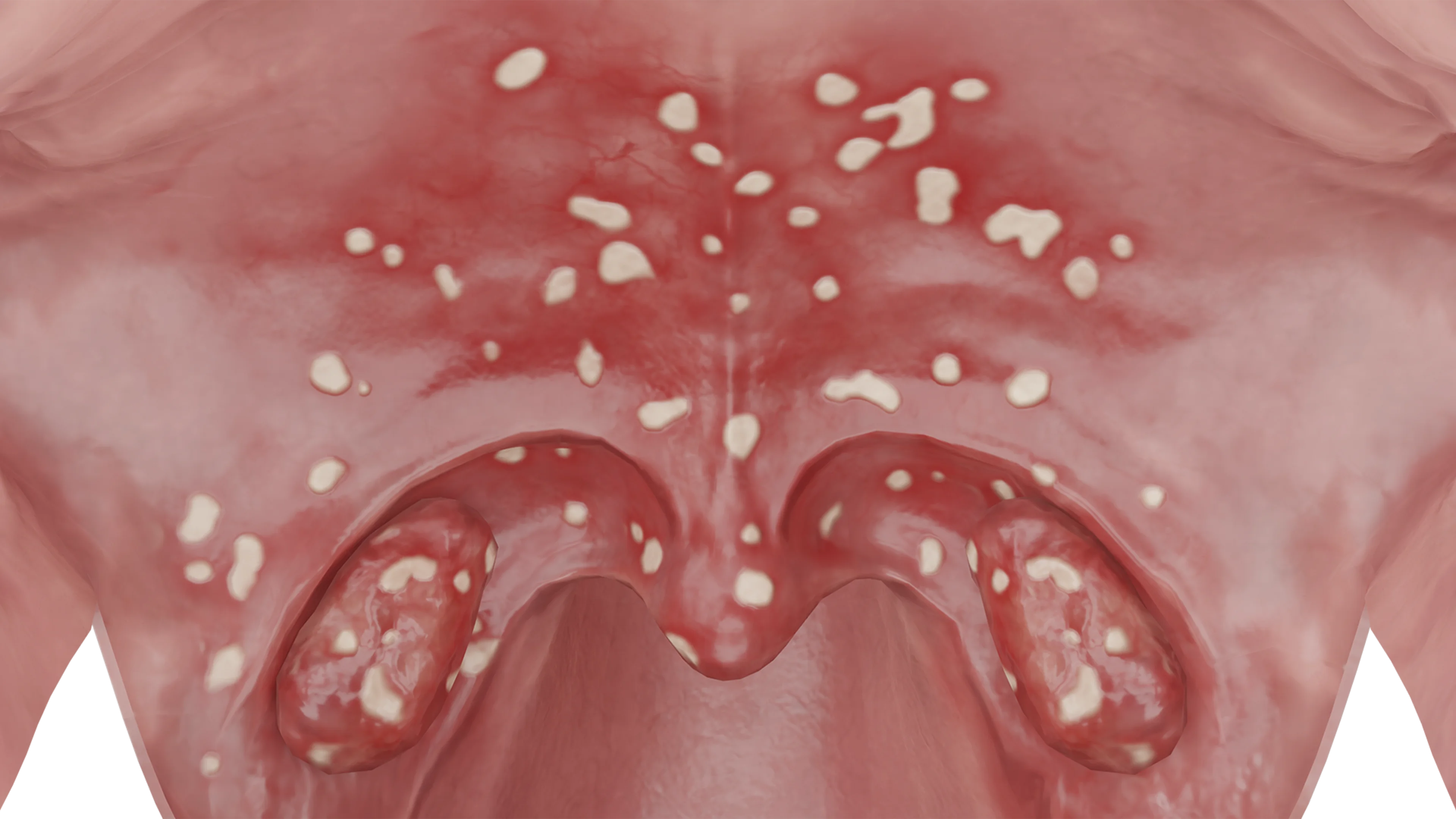
The infiltrative form is characterized by swelling of the vocal folds, which do not close completely during phonation. There may be mucous deposits on the lateral walls of the larynx, between the vocal folds, especially in the area of the interscapular space. The presence of plaque on the vocal folds and other parts of the larynx indicates the bacterial nature of inflammation.
Stroboscopy in patients with laryngitis identifies impaired mobility of the true vocal folds.
Find more scientifically accurate content on our social media


Большинству пациентов с острым неосложненным ларингитом достаточно симптоматического лечения:
In the presence of signs of infection or suspected bacterial nature of the disease prescribe:
1. What are the symptoms of acute laryngitis?
2. What are the symptoms of acute laryngitis in children and how to treat it?
3. What are the main causes of acute laryngitis?
4. What are the clinical guidelines for acute laryngitis?
5. How long does acute laryngitis last?
List of Sources
1.
VOKA 3D Anatomy & Pathology – Complete Anatomy and Pathology 3D Atlas [Internet]. VOKA 3D Anatomy & Pathology.
Available from: https://catalog.voka.io/
2.
Sclafani AP, Dyleski RA, Pitman MJ, Schantz SP. Total otolaryngology—head and neck surgery. New York: Thieme Medical Publishers; 2015. ISBN: 978-1-60406-646-3.
3.
Behrbohm H, Kaschke O, Nawka T, Swift A. Ear, Nose, and Throat Diseases. 2nd ed. Moscow: MEDpress-inform; 2016. 776 p. Russian. ISBN 978-5-00030-322-1.
4.
Gupta G, Mahajan K. Acute Laryngitis. [Updated 2022 Sep 12]. In: StatPearls [Internet]. Treasure Island (FL): StatPearls Publishing; 2025 Jan-.
Available from: https://www.ncbi.nlm.nih.gov/books/NBK534871/
5.
Jaworek AJ, Earasi K, Lyons KM, Daggumati S, Hu A, Sataloff RT. Acute infectious laryngitis: A case series. Ear Nose Throat J. 2018 Sep;97(9):306-313. doi: 10.1177/014556131809700920. PMID: 30273430.


Summarize article with AI
Choose your preferable AI assistant:
Link successfully copied to clipboard
Thank you!
Your message is sent!
Our experts will contact you shortly. If you have any additional questions, please contact us at info@voka.io