Human herpesviruses: general characteristics, classification, and diagnosis of infections
Yana Z.Infectious disease specialist, MD
12 min read·February 26, 2026
This article is for informational purposes only
The content on this website, including text, graphics, and other materials, is provided for informational purposes only. It is not intended as advice or guidance. Regarding your specific medical condition or treatment, please consult your healthcare provider.
Herpesviruses are large, enveloped, double-stranded DNA viruses. Taxonomically, the Herpesviridae family includes three subfamilies (Alphaherpesvirinae, Betaherpesvirinae, and Gammaherpesvirinae). More than 100 herpesviruses have been identified in various vertebrate species, 9 of which are proven to infect humans.
They cause a wide range of diseases, from mucocutaneous lesions (oropharynx, genital area) to severe disabling conditions (keratitis, encephalitis, congenital infections, and virus-associated malignancies). Infected individuals serve as reservoirs for herpesviruses and are sources of infection for susceptible contacts throughout their lifetime.
Epidemiology of herpesviruses
From an epidemiological perspective, herpesviruses are the most widely spread human pathogens, and the seroprevalence rate varies across countries depending on age, geographic, and socioeconomic factors. A significant portion of the population is infected with at least one or multiple human herpesviruses (HHV), often asymptomatically.
Approximately 3.8 billion people are infected with HSV-1 and around 520 million with HSV-2. Epstein-Barr virus (EBV) and varicella-zoster virus (VZV) are found in over 90% of the world’s adult population, and cytomegalovirus (CMV) in 40-100%. Antibodies to HHV-6 and HHV-7 are detected in a large number of children by the age of 5.
Human herpesvirus type 8 (KSHV, HHV-8) is associated with Kaposi’s sarcoma in patients with AIDS-stage HIV infection, some solid tumors, and lymphoproliferative diseases. Cases of human HHV infections lack seasonality (close contact occurs year-round).
Transmission of herpesviruses
HHVs are transmitted by various routes depending on the type:
Contact (direct) transmission: through biological fluids on direct contact with mucosal membranes and skin:
Saliva: all family members;
Vesicular contents: alphaherpesviruses;
Genital secretions: HSV, CMV.
Although HHVs are highly infectious following inoculation into mucous membranes or skin, their virions are unstable outside human cells, and most transmission requires close direct interpersonal contact (mucosal to uninfected mucosal or skin during intimate contact: kissing or sexual contact). Although skin is less susceptible to direct inoculation, the likelihood of infection increases with breaches in integrity (burn surfaces, eczema, atopic dermatitis, herpes gladiatorum in wrestlers, or herpes rugbiorum in rugby players). Viruses can persist for several hours on surfaces and objects, but such indirect contact is not associated with the risk of spreading HHVs.
All herpesviruses encode unique enzymes involved in viral DNA synthesis and provide unique targets for antiviral inhibition. Replication (from Latin replicatio—renewal, synthesis, and assembly of viral DNA, capsid formation) occurs in the nuclei of human cells.
A significant distinguishing feature of all human herpesviruses (HHVs) is their ability to develop latent infections following the primary infection (they are not eliminated after the primary infection; the viral genome persists in specific cell types (target cells), distinctive for each virus — unique tissue tropism). Infected individuals remain reservoirs of viruses throughout life and are sources of the virus for susceptible contacts.
Latency (from Latin latentis—hidden, invisible). During latency, viral genomes are maintained extrachromosomally or integrated into the cell’s DNA. Reactivation from latency occurs in response to various irritants or stimuli (stress, inflammation, immunosuppression, menstruation, exposure to ultraviolet radiation/cold, etc.), enabling viral spread among non-immune (susceptible) individuals. Reactivation predominantly proceeds asymptomatically, although it may lead to symptomatic relapse of the disease, up to life-threatening conditions (mainly in immunocompromised individuals).
HHVs employ multi-layered strategies to evade immune responses targeting innate and adaptive immunity, allowing them to establish stable, lifelong infections. These mechanisms operate throughout the virus’s lifecycle and are adapted to various stages of infection, including lytic replication, latency, and reactivation.
Structure and morphology of the virion
Structure of human herpesvirus: 1 — glycoproteins; 2 — capsid (nucleocapsid); 3 — lipid envelope; 4 — DNA genome; 5 — tegument
Despite biological diversity, all herpesviruses have a common virion structure. The key components of structure include:
DNA genome: located at the center, it is a large linear double-stranded molecule.
Capsid: an icosahedral shell made up of capsomeres, enclosing the genome.
Tegument: an amorphous layer surrounding the capsid. It contains viral factors essential for modulating immunity and intracellular transport.
Lipid bilayer envelope: the outermost layer, formed from the host cell membranes. Contains multiple glycoproteins, which confer distinctive properties to each virus, providing attachment, penetration, and cell-to-cell spread.
Classification of human herpesviruses (HHVs)
Based on genomic structure, replication kinetics, host range, and latency reservoirs, the Herpesviridae family is divided into 3 main subfamilies: Alphaherpesvirinae, Betaherpesvirinae, and Gammaherpesvirinae.
Classification of HHVs
Subfamily
Names
Diseases
Alphaherpesvirinae
HSV-1 — herpes simplex virus type 1; HHV-1 — human herpesvirus type 1
Primary infection: mucocutaneous lesions, conjunctivitis, encephalitis. Reactivation: recurrent herpes. These symptoms can also be caused by HHV-2
Alphaherpesvirinae
HSV-2 — herpes simplex virus type 2; HHV-2 — human herpesvirus type 2
Primary and recurrent genital herpes; neonatal herpes; meningitis. These symptoms can also be caused by HHV-1
Alphaherpesvirinae
VZV — varicella-zoster virus; HHV-3 — human herpesvirus type 3
HHV-6A, HHV-6B — herpes simplex virus types 5A and 5B
Pediatric roseola
Gammaherpesvirinae
HHV-8 — herpes simplex virus type 8; KSHV — herpesvirus associated with Kaposi’s sarcoma
Does not cause acute diseases, is associated with Castleman’s disease, Kaposi’s sarcoma*, and non-Hodgkin’s lymphomas in people living with HIV
Note: * Immunocompromised individuals
Characteristics of herpesvirus subfamilies
Alphaherpesviruses (HHV-1, HHV-2, VZV). Establish latency in sensory nerve ganglia, characterized by extremely short reproductive cycles (hours), pronounced cytopathic effects in infected epithelial cells, and the ability to reactivate, leading to mucocutaneous lesions.
Betaherpesviruses (CMV, HHV-6A, HHV-6B, HHV-7). Have long reproductive life cycles (days) and develop latent infections in myeloid progenitor cells, tissue macrophages, and secretory glands, enabling systemic persistence. Reactivation of betaherpesviruses causes disease in immunocompromised individuals.
Gammaherpesviruses (EBV, KSHV/HHV-8). Primarily infect lymphoid cells. Persistent infection is closely associated with lymphoproliferative disorders and malignant neoplasms.
Diagnostic methods for herpesviruses
Methods of initial diagnosis are clinically based on characteristic changes (lesions on the skin and/or mucous membranes).
Laboratory diagnostics
Cell culture (diagnosis of alphaherpesviruses through short replication cycles and cytopathic effect);
Immunofluorescence reaction (diagnosis of HHV-1 and HHV-2);
PCR (DNA detection, any biological medium);
Serological analysis (often a retrospective verification of infection).
Laboratory diagnosis of human herpesvirus
Prevention
Individual measures for infection prevention:
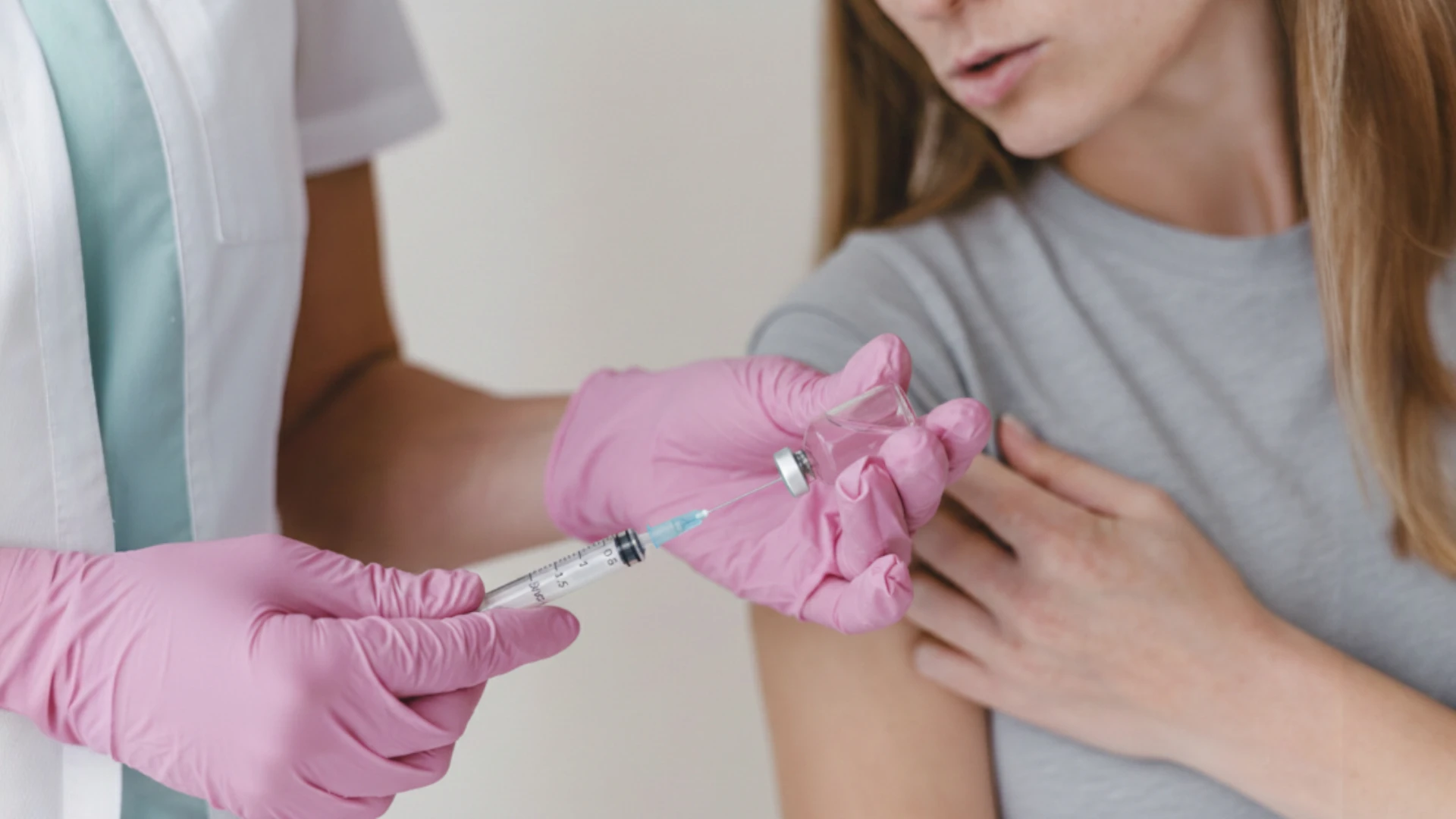
Vaccination prophylaxis. Currently, there are no licensed vaccines against HHV-1 or HHV-2; only vaccines for the prevention of VZV infection are available (live attenuated for chickenpox and recombinant for shingles).
Immunoprophylaxis. Immunoglobulin against VZV for patients without evidence of immunity to VZV who are at high risk of severe chickenpox and complications, who have been in contact with patients with chickenpox or shingles, and for whom chickenpox vaccination is contraindicated.
Find more scientifically accurate content on our social media
Subscribe and don’t miss out the latest resources
Approaches to therapy
Most diseases caused by Herpesviridae in immunocompetent individuals of various ages resolve spontaneously or require symptomatic therapy.
Antiviral drugs (AVDs) for the treatment of infections caused by alphaherpesviruses — acyclovir, valacyclovir, and famciclovir. For CMV infections — valacyclovir, ganciclovir, valganciclovir, foscarnet, and cidofovir. No effective AVDs are available against EBV.
Specific therapy for infections caused by HHV-6, HHV-7, and HHV-8 is not recommended, but in specific cases, valacyclovir, valganciclovir, foscarnet, and cidofovir can be used for HHV-6 treatment in immunocompetent individuals.
FAQ
1. What are herpesviruses, and what is their main characteristic?
Herpesviruses are a family of DNA-containing viruses whose distinguishing feature is the ability to develop lifelong latent infections. After initial infection, the virus persists in certain cells of the body and can reactivate under certain stimuli.
2. How many types of herpesviruses are pathogenic for humans?
Currently, it is proven that 9 types of herpesviruses infect humans, which are divided into three subfamilies (Alpha, Beta, and Gamma). These include the herpes simplex viruses types 1 and 2, varicella-zoster virus, Epstein-Barr virus, cytomegalovirus, and others.
3. What is latency, and why can’t the herpes virus be eradicated from the body?
Latency is a state in which the viral genome is preserved in cells (e.g., in neurons) in a “dormant” mode, not causing cell death and remaining invisible to the immune system. Current treatments can suppress viral replication but do not ensure its complete elimination from reservoir cells.
4. How are herpesvirus infections transmitted?
Transmission mainly occurs through direct contact via biological fluids (saliva, genital secretions). For varicella-zoster virus (VZV), airborne transmission is also characteristic. Vertical transmission from mother to child during pregnancy or childbirth is possible.
5. What preventive measures can be provided, and is vaccination available?
Specific vaccination prophylaxis is currently only available for varicella-zoster virus (VZV infection). For other types of HHV (e.g., herpes type 1 and 2), vaccines are under development, so the main measures include hygiene practices and the use of protective measures during sexual contacts.
References
1.
VOKA 3D Anatomy & Pathology – Complete Anatomy and Pathology 3D Atlas [Internet]. VOKA 3D Anatomy & Pathology.
Available from: https://catalog.voka.io/
2.
Whitley RJ. Herpesviruses [Internet]. Medical Microbiology – NCBI Bookshelf; 1996.
Available from: https://www.ncbi.nlm.nih.gov/books/NBK8157/