Enamel hyperplasia (enameloma): etiology, classification, diagnosis and treatment
Daria V.Dentist, endodontist, DMD
9 min read·December 23, 2025
This article is for informational purposes only
The content on this website, including text, graphics, and other materials, is provided for informational purposes only. It is not intended as advice or guidance. Regarding your specific medical condition or treatment, please consult your healthcare provider.
Enameloma is a tooth developmental anomaly that manifests as a spherical, protruding enamel mass on the root surface of a permanent or primary tooth. It is also referred to as enamel hyperplasia, enamel drop, enamel pearl, or enamel nodule.
Epidemiology
Enamelomas are quite rare. The incidence of enamel pearls varies depending on the study method and population:
generally, in individuals: 0.23 to 4.82%;
particularly on molars (in targeted studies): 1.71 to 6.80%.
The highest incidence is observed in the permanent molars of the upper jaw.
Etiology
Disruption of odontogenesis processes is the primary cause of enamel hyperplasia. The formation of enameloma is associated with the local transformation of the remnants of the enamel epithelium of Hertwig’s root sheath into enameloblasts (enamel-producing cells). Consequently, an ectopic drop of enamel develops where the root cementum should be.
The effect of enameloma on the organs of the oral cavity
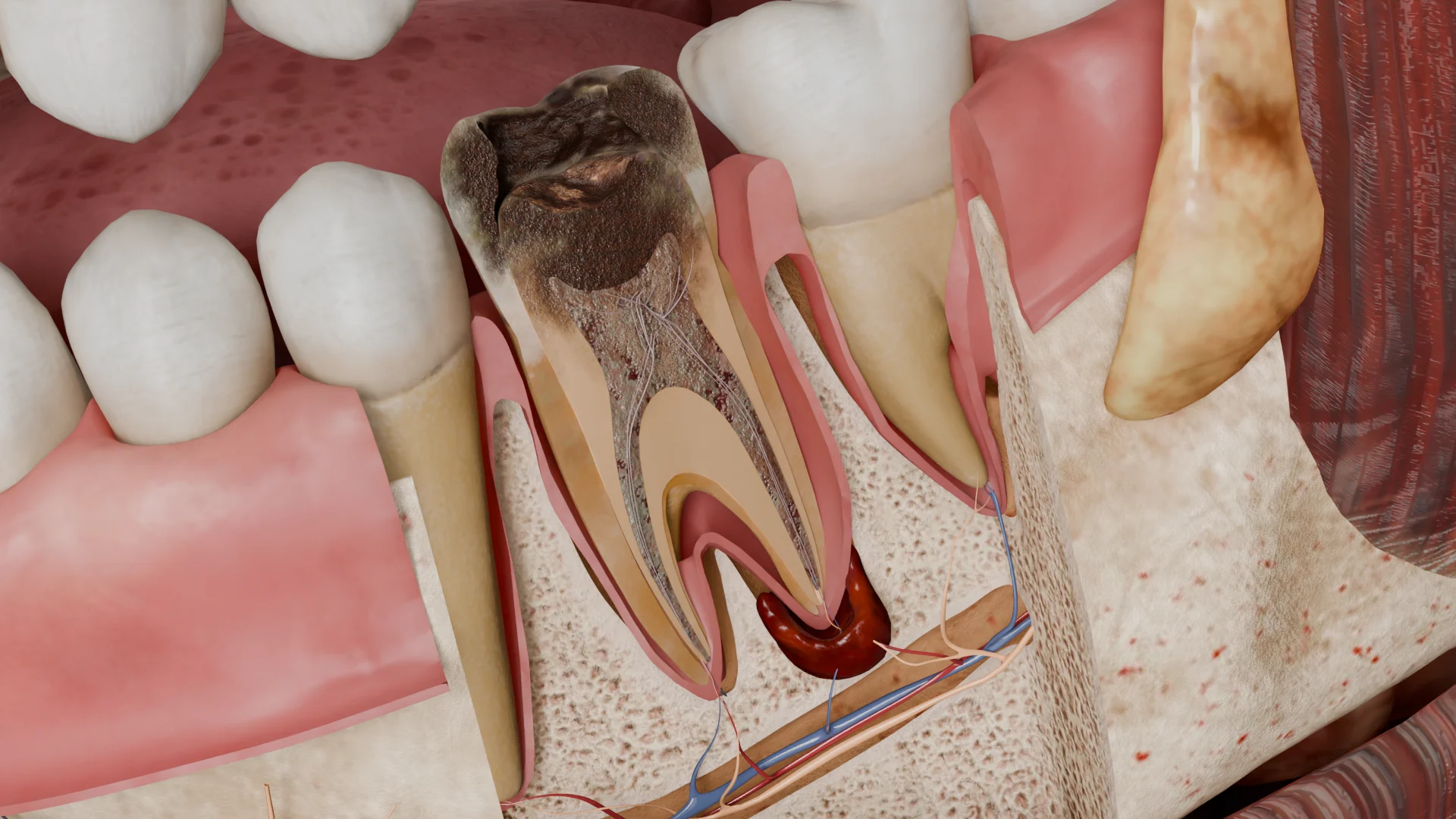
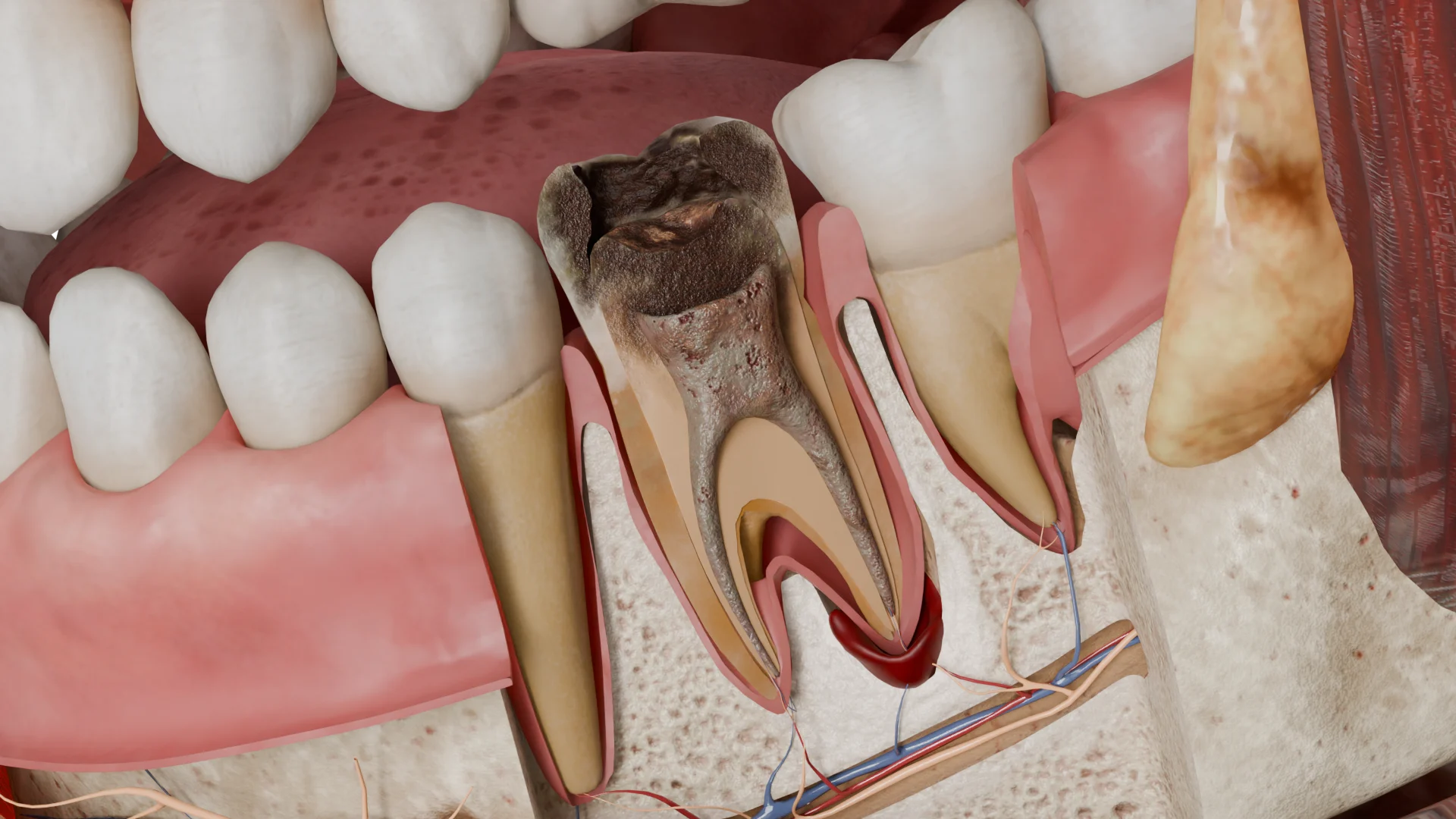
Enamel pearls prevent periodontal tissues from attaching to the root surface, create a niche for bacterial colonization and plaque retention, and make hygiene care difficult. If the enameloma is located in the area connecting with the oral cavity, it can provoke the rapid formation of a deep periodontal pocket and the development of local periodontitis. Enamelomas in the root furcation area of primary teeth can cause late replacement of primary teeth and deviation of the eruption path of the secondary teeth.
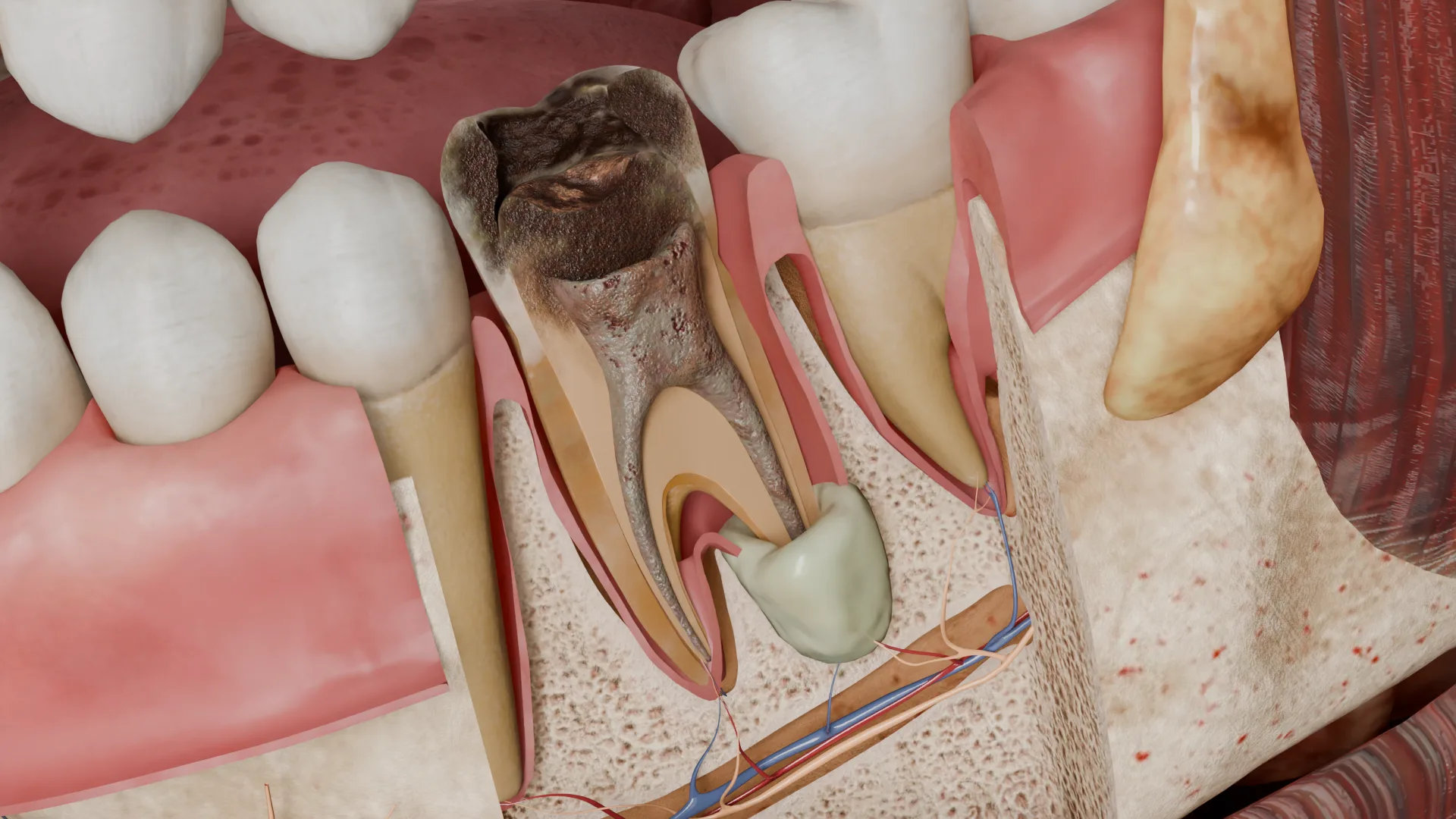
Macroscopically, enameloma appears as a round or hemispherical white formation with a smooth, shiny surface, tightly attached to the surface of the tooth root. Its size varies from 0.3 to 4.48 millimeters.
Histological classification
Enameloma type
Structure description
True enamel pearls
Contain enamel only
Enamel-dentin pearls
Contain dentin core coated with enamel
Enamel-dentin-pulp pearls
Contain pulp, which is often associated with the pulp cavity or root canal of the tooth
Location of enamel pearls
Most often, this abnormal finding is localized:
mesially or distally on the neck of the tooth, close to cementoenamel junction;
close to the root furcation or to the groove between incompletely separated roots.
Also, in rare cases, enamelomas can be found on the tooth crown or in the coronal, middle, or apical third of the tooth root.
Most commonly, enamelomas occur in the furcation areas of maxillary molars, between the distobuccal and the palatal roots. Large enamel pearls most often develop on the lower molars and may contain pulp. Enamelomas of maxillary molars are smaller in size but there may be several of them on one tooth. The cases of bilateral development of multiple enamelomas on all maxillary molars have been documented.
On premolars, canines, and incisors, enamelomas are quite uncommon. Sometimes enamel pearls are found in combination with other pathological masses (fibrous epulis, etc.).
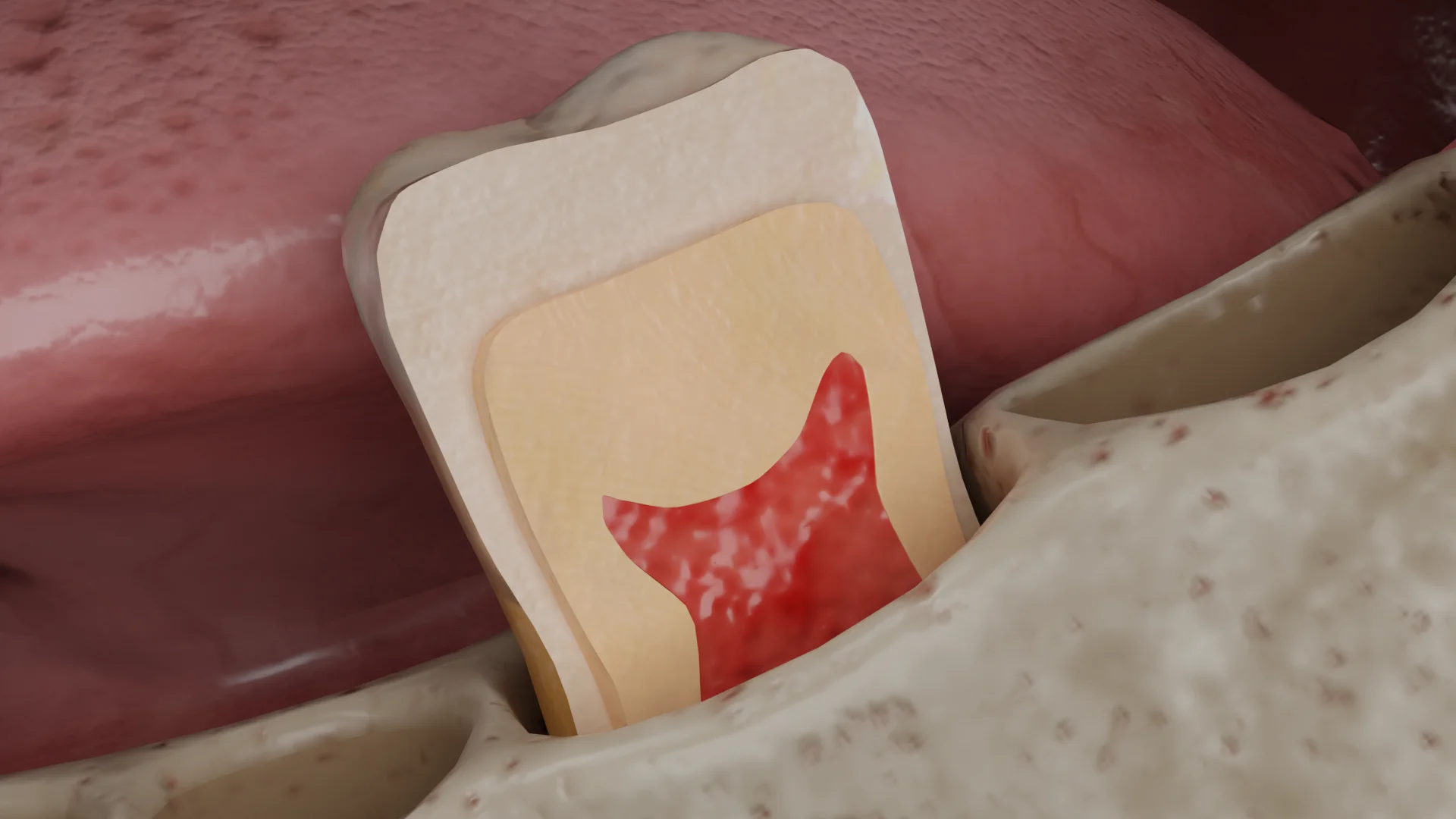
Enamel pearl on the distal surface of the first molar of the maxilla – 3D model
Clinical manifestations
An enamel pearl may be completely asymptomatic.
If an enameloma has caused the development of a periodontal pocket, the patient may complain of the following:
swelling and bleeding of the gums around one or more teeth;
food stuck between teeth;
pain when chewing;
tooth root exposed;
tooth loosening.
Clinically, a hemispherical, solid, white mass with a smooth surface on the tooth neck or bifurcation can be detected. In the event of concomitant local periodontitis, the gums around the mass are swollen and hyperemic and bleed when probing, and the depth the periodontal probe is placed into the gingival sulcus is 4 mm or more.
Diagnosis
Enamelomas can be clinically diagnosed visually on examination, during gingival retraction, periodontal probing, or tooth extraction surgery.
The main diagnostic approach is radiological, using the following methods:
intraoral (contact) X-ray;
radiovisiography;
dental panoramic radiography;
cone-beam computerized tomography (CBCT).
Radiographic findings: the radiograph shows a clearly defined, hyperintense, rounded shadow in the projection of the tooth neck, on the root surface, or in the furcation area of the tooth root. If the pulp is part of the mass, a radiolucency area may be detected in the center of the mass.
Treatment of enamel hyperplasia
Enameloma requires treatment if it is located in an area accessible to oral microflora penetration and biofilm formation.
The mass is excised using a diamond bur, the surface is ground and polished, and remineralizing therapy is administered. The patient should also be motivated to maintain oral hygiene carefully.
Possible complications of the mass excision:
tooth root caries;
external resorption;
pulpitis (if the enamel pearl contained vital pulp).
FAQ
1. What is enameloma and why does it develop?
Enameloma is a spherical enamel formation located on the surface of the tooth root. The main cause is the local transformation of Hertwig’s epithelial root sheath cells into ameloblasts, which normally form cementum but produce enamel instead.
2. How common are enamel pearls?
This is a rare abnormality, occurring in 1 to 5% of population. Most often, enamel pearls are found on the roots of the upper molars, especially at the place where the roots of teeth separate (furcation).
3. What are the risks of enamel pearl?
The main risk is that it disrupts normal gum attachment to the enamel. It creates a gap (“pocket”) between the tooth and the gum, in which biofilm constantly builds up. This leads to chronic inflammation of the periodontal tissues and the development of localized periodontitis, even with good hygiene.
4. How is enameloma diagnosed?
Most often, this abnormality is detected during an X-ray examination (intraoral [contact] X-ray, radiovisiography, dental panoramic radiography, or CBCT). On an X-ray scan, a dentist can see a clear, dense shadow of a rounded shape in the projection of the neck or root of the tooth. In rare cases, a dentist may detect such a mass during periodontal probing.
5. Does enameloma require treatment, and if so, what kind?
Treatment is only necessary if the enamel pearl contacts with the oral cavity and causes inflammation of the periodontal tissues. The dentist carefully removes the enamel mass by grounding with a bur, then thoroughly polishes the root surface to eliminate the pocket for biofilm and allow the dense gum attachment.
References
1.
VOKA 3D Anatomy & Pathology – Complete Anatomy and Pathology 3D Atlas [Internet]. VOKA 3D Anatomy & Pathology.
Available from: https://catalog.voka.io/
2.
Grine FE, Holt S, Brink JS, Du Plessis A. Enamel pearls: Their occurrence in recent human populations and earliest manifestation in the modern human lineage. Archives of Oral Biology [Internet]. 2019 Mar 16;101:147–155.
Available from: https://doi.org/10.1016/j.archoralbio.2019.03.004
3.
Zenóbio EG, Vieira TR, Bustamante RPC, Gomes HE, Shibli JA, Soares RV. Enamel Pearls implications on periodontal disease. Case Reports in Dentistry [Internet]. 2015 Jan 1;2015:1–3.
Available from: https://doi.org/10.1155/2015/236462
4.
Chrcanovic BR, Abreu MHNG, Custódio ALN. Prevalence of enamel pearls in teeth from a human teeth bank. Journal of Oral Science [Internet]. 2010 Jan 1;52(2):257–260.
Available from: https://doi.org/10.2334/josnusd.52.257
5.
Moharir AN, Akkottillam M, Bhagat S, Pagare V, Hakkepatil A, Bagde H. Enamel Pearls: A Culprit of Localised Periodontitis. Journal of Pharmacy and Bioallied Sciences [Internet]. 2025 Jun 1;17(Suppl 2):S2007–S2009.
Available from: https://doi.org/10.4103/jpbs.jpbs_566_25